
The central government has appointed advocate Narender Mann as special public prosecutor to conduct trials and other matters related to the National Investigation Agency case RC-04/2009/NIA/DLI against Tahawwur Hussain Rana and David Coleman Headley, who is in a US prison following a plea deal.

The Bombay High Court acquitted all 12 accused in the 2006 Mumbai train blasts case, citing a failure by the prosecution to prove their guilt and raising serious concerns about the investigation and evidence presented.

The highlight of Tuesday's debate on Operation Sindoor was the speech by Prime Minister Narendra Modi, with the rebuttal by Congress's Wayanad MP Priyanka Gandhi coming a close second.

American investigators who questioned Ajmal Amir Iman Kasab, the lone terrorist captured during the Mumbai attack, are convinced he is a Pakistani national and that the terrorist strike was planned and executed by the Lashkar-e-Tayiba, diplomatic sources said on Tuesday.These findings fit in with comments by top American leaders like Secretary of State Condoleezza Rice and Admiral Mike Mullen, the senior-most US military official, who have asked Pakistan to take quick action.
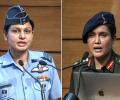
India conducted precision strikes on nine terror targets in Pakistan and Pakistan-Occupied Kashmir, targeting terrorist infrastructure to deter further attacks. The operation, codenamed 'Operation Sindoor', was detailed by two women military officers, Col Sofiya Qureshi and Wing Commander Vyomika Singh, at a press briefing in New Delhi. The officers highlighted the precise nature of the strikes, emphasizing the use of "niche technology weapons" to ensure no collateral damage. The briefing showcased India's military prowess and the growing role of women in the armed forces.
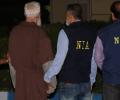
Tahawwur Hussain Rana, a Canadian national accused of involvement in the 2008 Mumbai terror attacks, has been extradited to India from the United States. Rana's interrogation is expected to shed light on the role of Pakistani state actors in the attacks, which claimed 166 lives. Indian authorities are particularly interested in his travels across India in the days leading up to the attacks, including visits to Hapur, Agra, Delhi, Kochi, Ahmedabad, and Mumbai. Rana's extradition follows a lengthy legal battle, with the US Supreme Court ultimately denying his application to challenge it. Rana is known to be associated with Pakistani-American terrorist David Coleman Headley, one of the main conspirators of the 26/11 attacks. The investigation into the Mumbai attacks has implicated senior members of terror outfits Lashkar-e-Taiba (LeT) and Harkat-ul Jihadi Islami (HuJI), as well as officials from Pakistan's Inter-Services Intelligence (ISI).
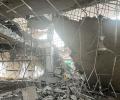
'India won't take anything from Pakistan lying down.'
Evidently on the strength of continuing information provided by Lashkar-e-Tayiba operative and Pakistani American David Coleman Headley alias Daood Gilani, who was an integral protagonist in the conspiracy that led to the horrific 26/11 Mumbai terror attacks, four new Lashkar handlers of Headley have been chargesheeted in the US District Court for the Northern District of Illinois (Chicago).

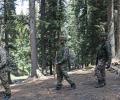
The National Investigation Agency (NIA) has started interviewing eyewitnesses, including tourists, in connection with the deadly terrorist attack in Pahalgam, south Kashmir. The attack, carried out by terrorists from the Pakistan-based Lashkar-e-Taiba (LeT), claimed the lives of 26 people on April 22. Initial investigations suggest that five to seven terrorists were involved, aided by local militants trained in Pakistan. Security forces are conducting massive operations to hunt down the terrorists in the dense jungles of the Pir Panjal range.

Official sources said the first one was the truck driver who drove them to Samroli in Udhampur from Kulgam and other one was a bakery owner at Pulwama.
India seeks information from Spain on arrested Pakistani

The attack, which took place near a heavily guarded complex housing All India Radio and Doordarshan Kendra near the Tourist Reception Centre, comes a day after security forces eliminated a top Pakistani commander of Lashkar-e-Tayiba in the Khanyar locality of downtown Srinagar.
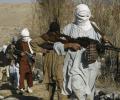
LeT commander Abdul Rehman al-Dakhil was named as a Specially Designated Global Terrorist (SDGT) by the Department of State.
Patrolling along the Bangladesh border was stepped up following the arrests.

Tahawwur Rana, accused in the 2008 Mumbai terror attacks, has renewed his application to the US Supreme Court seeking a stay of his extradition to India. The Supreme Court will hear the application next month. Rana, currently detained in Los Angeles, claims his extradition would violate US law and expose him to torture in India due to his health and Muslim background. The US government has denied these claims and authorized his surrender to India, citing the Extradition Treaty between the two countries. The Supreme Court's decision will determine if Rana will face justice in India or remain in the United States.
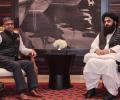
India has said it will consider engaging in development projects in Afghanistan and provide material support to the country in the health sector. The announcement came after Foreign Secretary Vikram Misri held talks with the Taliban regime's acting foreign minister Amir Khan Muttaqi in Dubai.

'Fears in Washington began to intensify when it was realised that subsequent Pakistani and Indian attacks on major military facilities -- which were significant in terms of geographic scope and intensity -- could rapidly take both sides to where neither actually wanted to go.' 'The US objective was to stop the fighting as soon as possible. Everything else was secondary.'
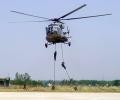
'Pakistan cannot sustain a war with India for more than four days. They are in such dire straits. At best they can sustain war for one week.'
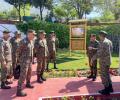
'Surgical strikes or air strikes, or both, are likely on the table.'
The National Investigation Agency (NIA) has begun questioning Tahawwur Hussain Rana, the mastermind behind the 2008 Mumbai terror attacks, to uncover the larger conspiracy behind the deadly strikes. Rana, who was extradited from the US, is being held at the NIA headquarters in New Delhi. The interrogation is focused on his possible connection with the Lashkar-e-Taiba (LeT) and his suspected links with the Pakistani spy agency Inter-Services Intelligence (ISI).
A Pakistani militant belonging to the Lashkar-e-Tayiba outfit was among three killed in two separate encounters on Sunday in Jammu and Kashmir, where three militants remain holed up in a mosque.
The Federal Bureau of Investigation has arrested a Pakistani national with permanent legal residency in the United States on charges of supporting the banned militant outfit Lashkar-e-Tayiba. Jubair Ahmad, 24, according to the affidavit in support of the criminal complaint unsealed on Friday, received "indoctrination and training from the LeT while he lived in Pakistan" as a teenager. If convicted, he faces a maximum potential sentence of 15 years in prison.
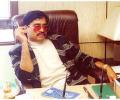
'6 shooters went to kill Dawood in Pakistan.'
A Pakistani national has been sentenced to 12 years in prison in the United States on charges of providing material support to Lashkar-e-Tayiba by producing propaganda videos for the terror outfit and helping it with recruitment of would-be militants.

Tahawwur Hussain Rana, a Pakistan-born Canadian national and close associate of David Coleman Headley, is set to be extradited to India from the US. Rana was involved in the planning and execution of the 2008 Mumbai terror attacks, which killed 166 people, including six Americans. He assisted Headley in obtaining a visa for India, established a front company in Mumbai, and helped in reconnaissance of targets in Mumbai and New Delhi. Rana was convicted in the US for providing material support to Lashkar-e-Taiba (LeT) and sentenced to 14 years in prison. His extradition to India will allow authorities to question him about his involvement in the Mumbai attacks and potentially uncover new information about the role of Pakistani state actors.
'Had Haji Pir and/or Skardu been taken, the message would have gone out not just to General Asim Munir and his cohort in the Pakistan army but to the Pakistani people that every terrorist incident in India would lead to substantial loss of territory in PoK.'
Mohammad Aatique, 31, is first to be sentenced among a group of 11 people indicted in Pennsylvania and Virginia in July for training with assault rifles.
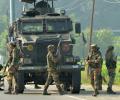
The search operation turned into an encounter after the terrorists fired upon the security forces who retaliated, he said.

'Pakistan's only concern has been while they were on the FATF watch list was to distance their State institutions and organs from any direct connection with the actual execution of militancy inside Kashmir.'

Former interior minister Rehman Malik has termed Pakistani-American terrorist's testimony in the 2008 Mumbai attack case as "a pack of lies".
'It is typical of China's strategic deception of making virtue out of necessity,' observes Rup Narayan Das.
A 31-year-old Pakistani national has been arrested in Malaysia's Perak province on charges that he underwent terrorist training at a Lashkar-e-Tayiba camp before he arrived in Malaysia in August 2016.
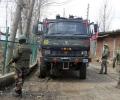
Two terrorists were killed in an overnight gunfight in Hajin area of Bandipora district, officials said.

'I can easily say that BJP should not have joined hands with PDP in Jammu and Kashmir. If you are totally against terrorism, then you have to be sincere in that'

But senior superintendent of police, operations, Lahore Syed Ali Raza told the Dawn newspaper that "Tamba is still alive but critically injured".

Saifullah, the Pakistani terrorist who masterminded at least three attacks on security forces during the past month, was killed in the encounter with security forces, a police official said.
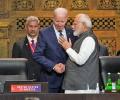
Pakistan has formally lodged a protest with the US over its joint statement with India against the country's involvement in cross-border terrorism.

Karachi-based port worker, who had seen 10 lashkar-e-Tayiba terrorists leaving in a boat hours before the brazen Mumbai terror attacks of 2008, was cross-examined in a Pakistani anti-terrorism court on Wednesday.
The government of Pakistan's Punjab province has decided to disassociate itself from the case against Jamaat-ud-Dawa chief and Lashkar-e-Tayiba founder Hafiz Muhammad Saeed, the suspected mastermind behind the terror attack on Mumbai, and filed a plea for its withdrawal.On Monday, the provincial government informed Pakistan's Supreme Court that it has challenged the release of Saeed due to certain 'confidential evidence' against him.
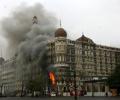
A Pakistani anti-terrorism court on Thursday adjourned the Mumbai attacks case for three weeks after the prosecution said India had not submitted a report on the cross-examination of key witnesses by a Pakistani judicial commission.
